
Key Takeaways
- After losing a spouse, moving on can be difficult as their belongings linger in your home.
- Reframe your thinking: your relationship was with your spouse, not with their stuff.
- Follow three simple steps: identify, document, and discard/donate.
- Set aside time each week to tackle this task, and seek help from different family members or friends.
- As you progress, it becomes easier to let go and consider new ways to use the space.
Estimated reading time: 4 minutes
After your spouse passes away, time may move very slowly and become a blur.
Before you know it, a year passes.
You look around your house, and it’s as if your spouse is still alive.
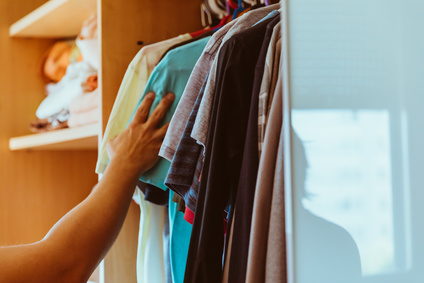
Their clothing, personal grooming items, things related to their hobbies, or anything that was once theirs still lingers as if frozen in time.
Your adult kids and other family members keep nudging you to end your relationship with their stuff.
You know you need to let go and move on, but how do you begin?
Reframe Your Thinking
If you don’t need to relocate and plan to stay in your current home, it’s hard to motivate yourself to sift through these items.
It stirs up lots of memories and emotions.
One thing to keep in mind is that your relationship was with your spouse, not with their stuff.
Getting rid of stuff will not mean you’re getting rid of that relationship. You still have your memories.
Once you’ve reframed how you think about it, find a family member or friend to help you begin.
Three Simple Steps
Follow these three simple steps as you sift through personal belongings: identify, document and discard/donate.
Even though there are three steps, keep in mind they can take a lot of emotional energy and time.
Be patient with yourself through this process.
1- Identify
Identify an area to begin – whether it’s a drawer, closet, or room.
Start small, then gradually tackle larger areas.
If you’re not in a rush to move, block off time every day or week to tackle a small area.
2- Document
Ask a family member or friend to video you talking about each item. Use your smartphone to capture this video.
Spend time describing the item; note anything special about how it feels or smells.
Another option is to take a picture with each item and voice record your description.
In this way, you’ll have a digital memory of the item and can part with the actual item.
Ask different family members or friends to help you each day so you’re not relying on one person’s time.
3- Discard/Donate
Once you’ve captured the digital memory of the item, decide whether to discard or donate it.
Donating items in good condition can be reused by someone in need.
As time goes on, you’ll find yourself more willing to let go of their stuff.
You’ll also start thinking of ways to reuse the space, giving you a new perspective on moving forward after your spouse’s death.
As you continue your journey, reach out to us for our “Moving Beyond Grief” guidance.
(Update to original post from August 5, 2024)
ABOUT THE AUTHOR:

Niv Persaud, CFP®, is the Founder of Transition Planning & Guidance, LLC (TransitionPG®). She believes life is more than accumulating money – it’s about living the lifestyle you envision and can afford. Niv incorporates all aspects of life when discussing money. She developed the 5 P’s of Life (Personal Relationships, Personal Finance, Profession, Peace of Mind, and Physical Health) to help clients define what they want from life. Once she understands their vision, she helps them achieve their lifestyle or adjust their expectations based on their finances. Niv actively gives back to the community through her volunteer efforts. She believes in living life to the fullest by cherishing friendships, exploring the world, and laughing often—even at herself. Her favorite quote is by Erma Bombeck, “When I stand before God at the end of my life, I would hope that I would not have a single bit of talent left and could say ‘I used everything you gave me.’” Click HERE to read where she’s been quoted in the media.
LATEST POSTS: